

Advanced Procedural Landscape Material
Drop-in landscape material for UE5, twelve biomes, six base layers, automatic angle and height blending, per-biome seasonal color, per-material weather, and Texture2DArray-backed surface packing.
Overview
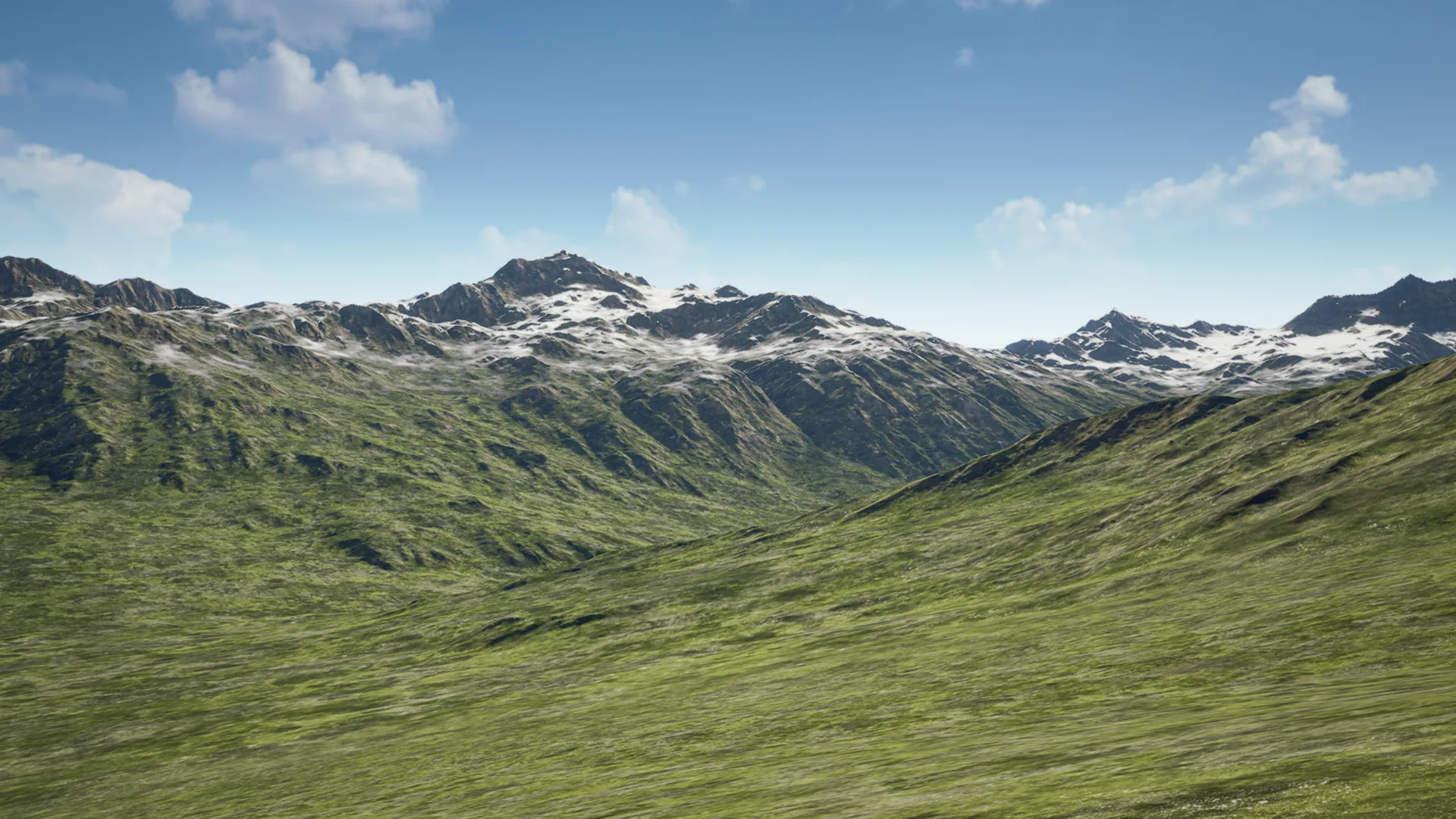
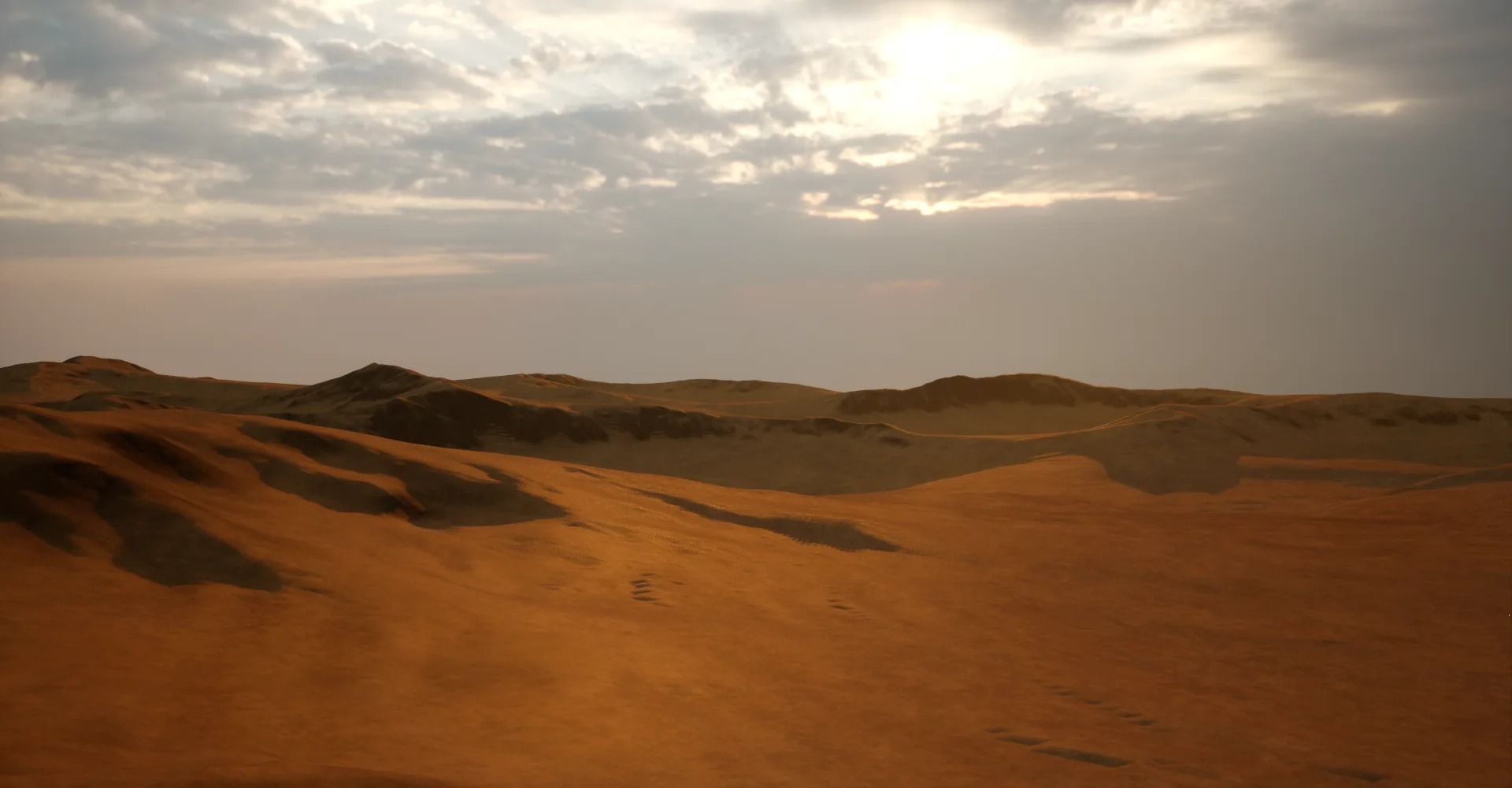
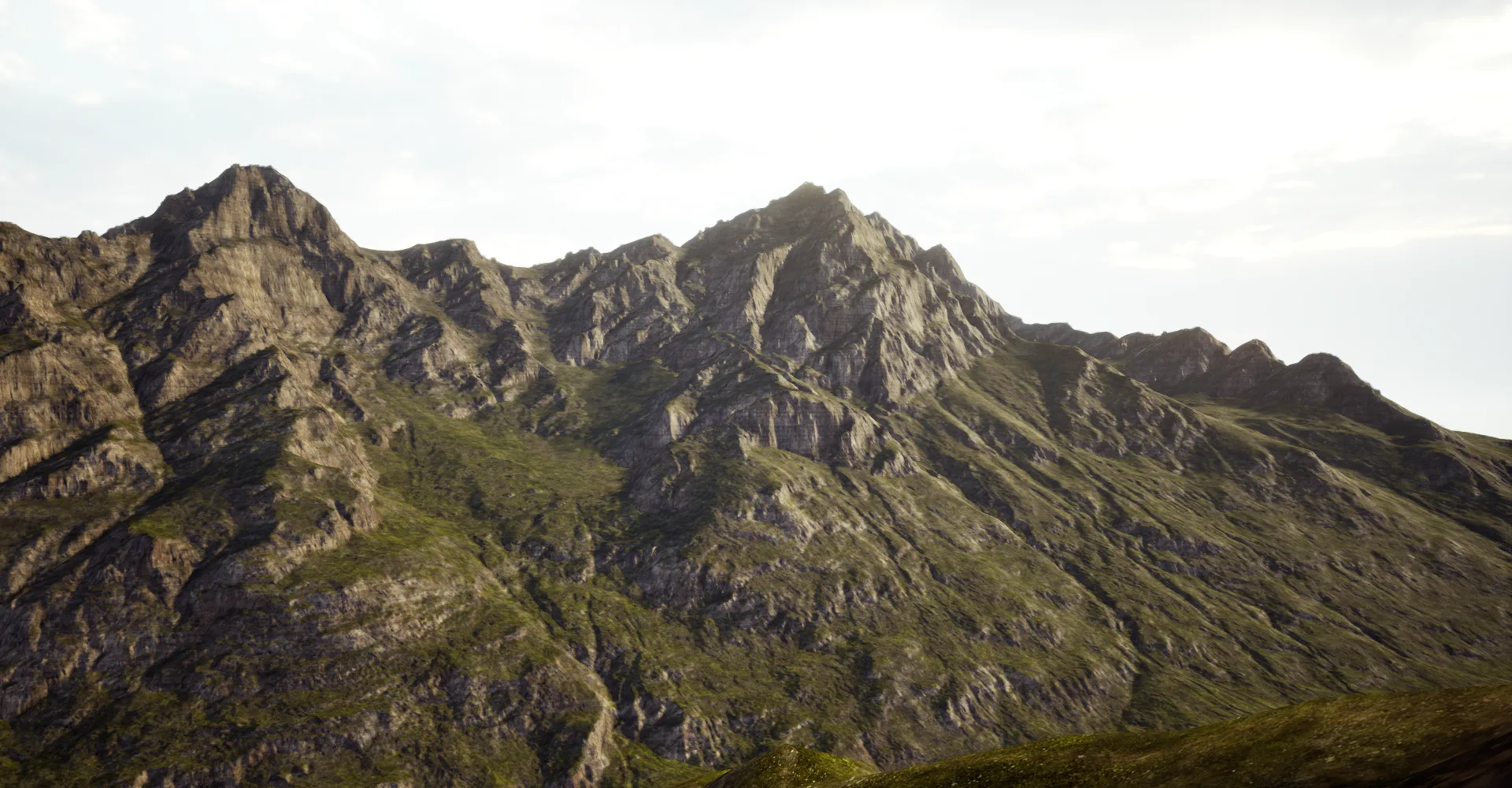
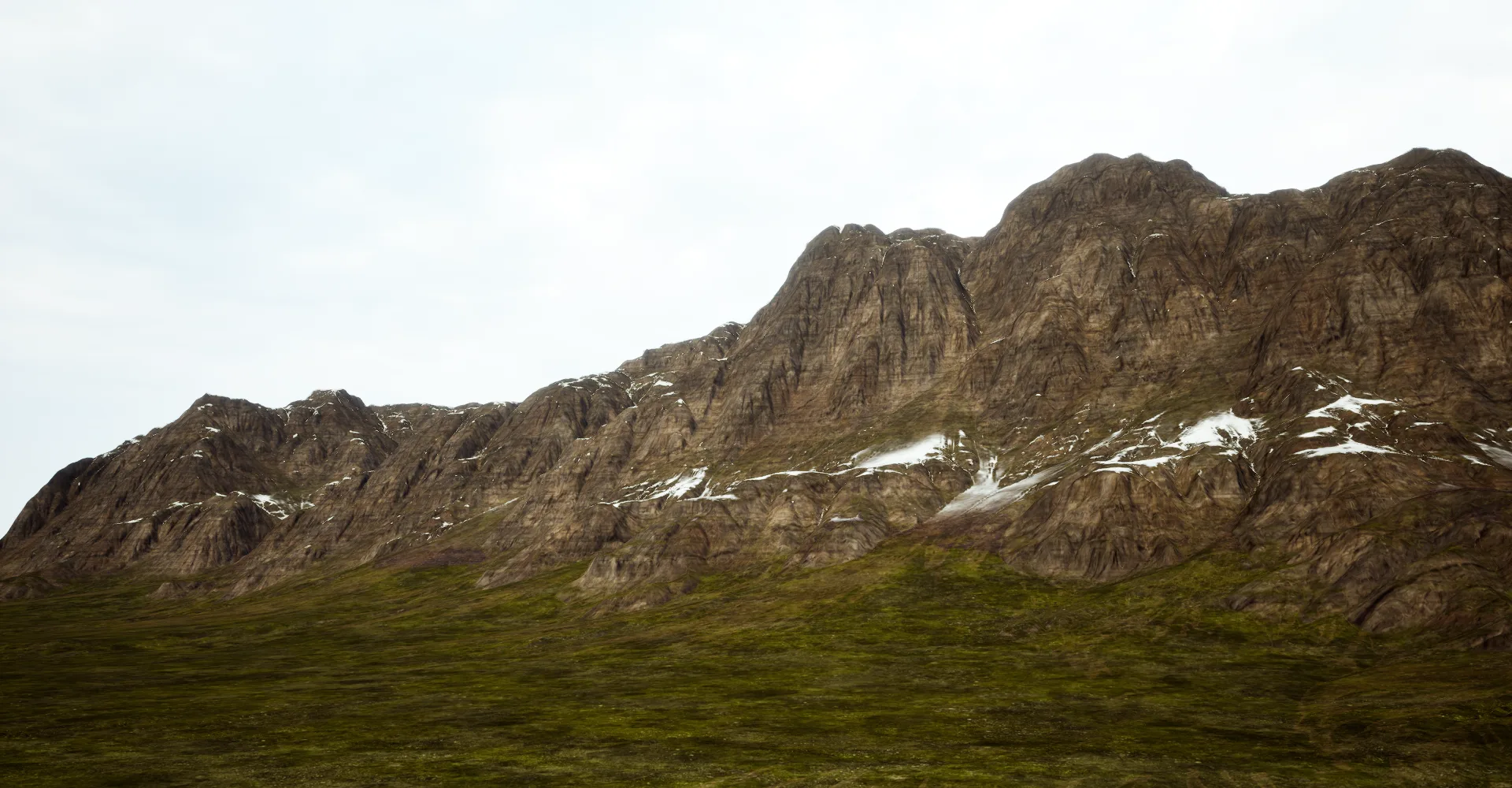
Section titled “Overview”Advanced Procedural Landscape Material (APLM) is a comprehensive, biome-driven landscape material built entirely inside Unreal Engine 5’s Material Editor. It generates realistic multi-biome terrain surfaces automatically, without manual painting on every layer. The system combines height-based blending, angle-based blending, landscape layer samples, Texture2DArray sampling, per-biome seasons, and per-material weather to decide which surface appears at any point on the landscape.
The material ships with six base layers used during automatic generation and twelve biome layers (nine built-in plus three fully customizable) that can be painted in. Every layer is configured through a Material Instance, controlled at runtime by Material Parameter Collections (MPC_Weathers and MPC_Seasons), and ready for Blueprint, Sequencer, and Data Asset workflows.
What APLM gives you
Section titled “What APLM gives you”- Drop-in Material Instance: assign it to a landscape and the surface paints itself.
- Twelve biome layers: Tundra, Boreal Forest, Desert, Mediterranean, Savanna, Temperate Forest, Tropical Rainforest, Wetland, Grassland, plus three fully customizable slots.
- Six base layers used during automatic landscape generation: Beach, Cliff, Grass, Gravel, Mud, Snow.
- Automatic angle blending: cliffs, gravel, and slope-driven materials apply themselves based on landscape normal.
- Automatic height blending: beach below a Z threshold, snow above, smooth transitions in between.
- Per-material weather pipeline driven by
MPC_Weathers: each biome and base layer reacts independently to rain and snow. - Per-biome season pipeline driven by
MPC_Seasons: smooth color, brightness, contrast, specular, and roughness transitions across seasons. - Texture2DArray (T2DA) packing: BaseColor, Normal, and ORD/ORH ship in a single GPU resource per surface, keeping the sampler budget under control.
- Texture variation system to break up tiling patterns at scale.
- Triplanar mapping support per surface.
- Optimized noise-based texture repetition prevention.
- Customizable per-biome puddle parameters (Tundra gravel puddle, Tropical Rainforest mud puddle, grass mud puddle).
- Special parameters for fine control:
BeachHeight,SnowHeight,GrasstoSnowSmoothness, gravel angle blend tunables, and more. - Physical Materials support for footstep, decal, and gameplay queries.
- Landscape Grass Types support for runtime grass scattering.
- Runtime Virtual Texture support.
- Blueprint support through
BP_APLMControllerand ready-made structs (F_ColorGrade,F_SeasonCore,F_SeasonMetadata,F_SeasonParameters,F_WeatherParameters). - Sequencer support for animated season and weather cycles.
- Data Asset support for persisting biome configurations.
Documentation
Section titled “Documentation”Get started
- Quick Start: two steps to a finished landscape
Concepts (the why and when)
- Biome materials vs base materials: when each layer type fires
- Texture2DArray (T2DA): why APLM packs surfaces this way
- Season system: per-biome color shifts driven by
MPC_Seasons - Weather system: per-material rain and snow driven by
MPC_Weathers
Guides (the how)
- Basic setup: assign the material, configure layers, paint with Auto Layer
- Creating your own Texture2DArray: swap in custom BaseColor, Normal, and ORD/ORH textures
- Authoring a custom biome: use the three
BiomeCustomslots - Driving seasons from Blueprint: wire
BP_APLMControllertoMPC_Seasons
Reference (the what)
- Biomes: every shipped biome with its texture model and unique parameters
- Parameters: the 24 per-surface variables exposed by every layer
- Special parameters: cross-cutting parameters that shape the whole landscape
- Weather parameters: per-material weather controls
- Season parameters: per-biome seasonal overrides
- APLM Controller: the runtime Blueprint that pushes seasons and weather into the MPCs